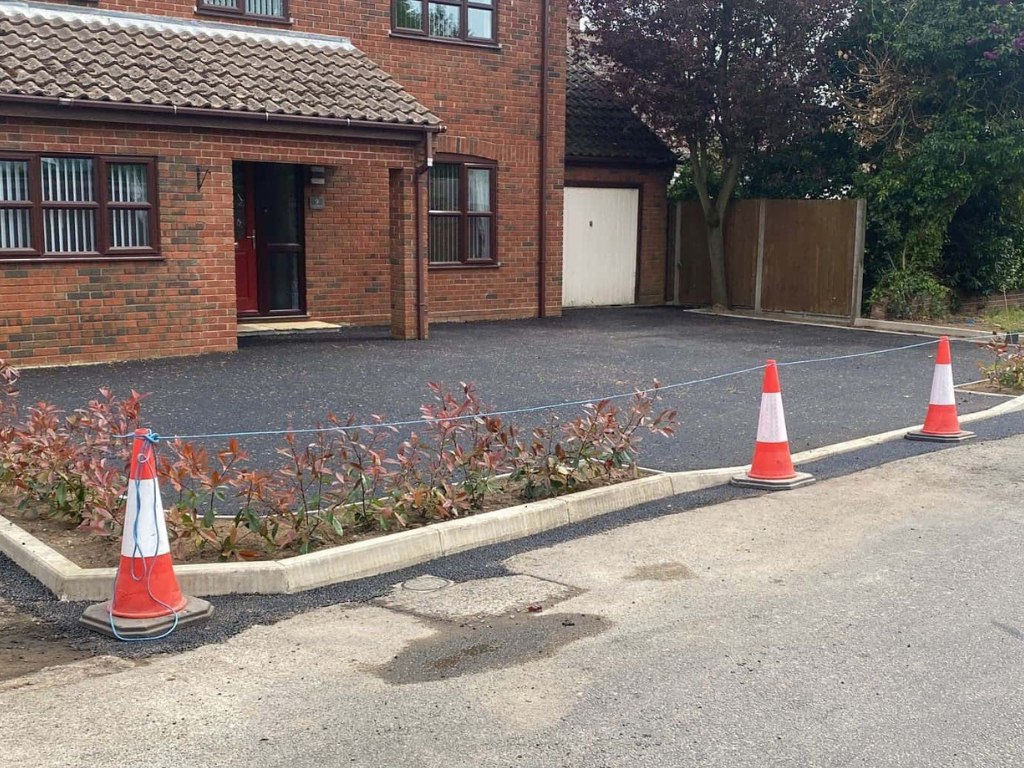
What Are the Main Benefits of Installing a Tar and Chip Driveway?
Why Tar and Chip Is a Practical Driveway Surface
A tar and chip driveway is created by applying a hot bituminous binder to a prepared base, spreading stone aggregate across it and rolling the material into place. The binder secures the stone, while the aggregate forms the visible driving surface.
This construction produces a textured finish that combines reliable vehicle access with a more natural appearance than a completely smooth surface. For homeowners in Godalming, Surrey, tar and chip can be a practical choice where durability, character and straightforward maintenance are priorities.
A Naturally Textured Appearance
One of the main benefits of tar and chip is its distinctive appearance. The exposed aggregate creates variation in colour and texture, helping the driveway blend with surrounding walls, planting and garden features.
The type of stone selected influences the final look. Different aggregate sizes and colours can be used to complement the character of the property, while the irregular texture prevents the surface from appearing overly uniform.
This makes tar and chip particularly suitable for homeowners who want a finished driveway that looks established rather than highly polished.
Strong Performance Under Regular Vehicle Use
A professionally installed tar and chip driveway can provide a durable surface for everyday parking and access. The bituminous binder holds the aggregate in place, while the stone layer protects the material beneath from direct traffic wear.
Performance depends on several factors, including:
- The stability of the underlying ground
- Sub-base depth and compaction
- Binder application
- Aggregate quality and cleanliness
- Thorough rolling
- Edge support
- Effective drainage
When each stage is completed correctly, the finished surface can distribute vehicle loads and resist routine wear.
Useful Grip From the Exposed Aggregate
The stone finish provides a naturally textured surface beneath tyres and footwear. This can offer useful grip on driveways where a smoother finish may feel less secure in wet conditions.
Aggregate must be spread and embedded evenly. Excessively loose stone can move beneath tyres, while insufficient coverage may expose areas of binder. Professional installation helps create a consistent texture across parking, turning and walking areas.
Suitable for Long or Irregular Driveways
Tar and chip can be laid across driveways of different sizes and shapes. It can follow curves, changing widths and irregular boundaries without requiring a repeating pattern.
This adaptability is valuable where the driveway includes:
- Long access routes
- Wider parking areas
- Turning spaces
- Curved entrances
- Sloping sections
- Connections to paths or outbuildings
The design should still account for vehicle movements, drainage and secure edges before installation begins.
A Finish That Can Suit Larger Areas
Large driveways can appear visually dominant when covered with a completely uniform material. The natural variation within a tar and chip surface can soften the appearance of an extensive area.
Contrasting kerbs or edging may be used to define the boundaries, separate planted areas and provide structural support. Thoughtful detailing can make the driveway feel integrated with the wider property rather than functioning as one uninterrupted expanse.
Straightforward Routine Maintenance
Tar and chip generally requires uncomplicated ongoing care. Regular sweeping can remove leaves, soil and surplus aggregate, while clear drainage prevents water from collecting on the surface.
Useful maintenance tasks include:
- Keeping gutters and channels clear
- Removing weeds from boundaries
- Monitoring high-use turning areas
- Checking for bare patches
- Watching for cracks or depressions
- Returning displaced loose aggregate from walkways
- Addressing drainage problems promptly
A small amount of loose stone may remain after installation as the surface settles. Continued stone loss or exposed binder should be professionally assessed.
Localised Wear Can Be Identified Clearly
Because the surface contains visible aggregate, changes in condition are often noticeable. Areas that are losing stone, becoming smooth or developing depressions can be identified before deterioration becomes widespread.
Common warning signs include:
- Dark patches where aggregate has been lost
- Loose stone collecting repeatedly at the edges
- Cracking through the surface
- Movement along wheel tracks
- Potholes or depressions
- Standing water after rainfall
- Weak or crumbling boundaries
The correct repair depends on the underlying cause. Simply adding more stone will not resolve movement within the base or poor drainage.
The Surface Can Be Refreshed When Conditions Are Suitable
Where the foundation remains sound, a worn tar and chip surface may sometimes be renewed with an additional treatment. This can restore texture and improve coverage without reconstructing stable supporting layers unnecessarily.
Before any new application, the driveway should be inspected for:
- Base movement
- Widespread cracking
- Drainage defects
- Contamination
- Unstable edges
- Deep depressions
- Failed previous repairs
Existing problems must be addressed first, or they may transfer through the renewed surface.
Good Drainage Can Be Incorporated Into the Design
Every driveway needs to direct rainwater away efficiently. Tar and chip can be laid to suitable falls so that water flows towards planned drainage points rather than remaining on the surface.
Proper drainage helps protect both the visible finish and the foundation below. If water enters cracks or weak edges, it can soften supporting layers and contribute to movement.
For this reason, levels, channels and surrounding ground conditions should be considered before surfacing begins.
Why Ground Preparation Is Essential
The finished aggregate layer cannot compensate for an unstable foundation. Soft ground, insufficient excavation or poorly compacted sub-base material can lead to sinking and cracking regardless of the quality of the surface treatment.
Professional preparation may involve:
- Removing unsuitable existing material
- Excavating to an appropriate depth
- Establishing stable formation levels
- Installing a suitable sub-base
- Compacting materials in controlled layers
- Forming the required drainage falls
- Securing the driveway edges
A well-prepared base gives the binder and aggregate a stable platform on which to perform.
Professional Installation Produces a More Consistent Finish
Tar and chip installation requires careful coordination. The binder must be applied evenly, and the aggregate needs to be spread while the surface is ready to receive it. Rolling then embeds the stone and creates consistent coverage.
Poor timing or uneven application can result in loose aggregate, bare patches and variable texture. An experienced contractor can select suitable materials and manage each stage according to the driveway’s layout and intended use.
Is Tar and Chip Suitable for Every Driveway?
Tar and chip is versatile, but site-specific assessment remains important. The condition of the ground, expected vehicle use, gradient, turning movements and drainage all influence suitability.
Driveways exposed to frequent stationary steering or sharp manoeuvres may experience more aggregate movement in concentrated areas. The design and material specification should account for these patterns before work begins.
Conclusion
The main benefits of a tar and chip driveway include its natural appearance, textured finish, durability, adaptability and suitability for large or irregular areas. Routine maintenance is generally straightforward, and worn surfaces may be refreshable where the underlying base remains stable.
If you are considering tar and chip surfacing in Godalming, Surrey, NS Driveways Godalming can assess the site and recommend an appropriate installation approach. Careful preparation and professional application are essential for achieving a consistent and dependable driveway.
Call us on: 01483 967 393
Click here to find out more about NS Driveways Godalming
Click here to complete our contact form and see how we can help with your driveway needs.